
Smart Choices for Students: Comparing Top Educational Platforms

Navigating the vast array of educational platforms available today can feel overwhelming for students seeking the best tools to enhance their learning experience. With so many options, each offering different features and pricing structures, making the right choice isn't always straightforward. This article aims to simplify that process by providing a detailed comparison of some of the most popular platforms, helping students select the one that best aligns with their academic goals and financial considerations.
Overview of Subscription Pricing
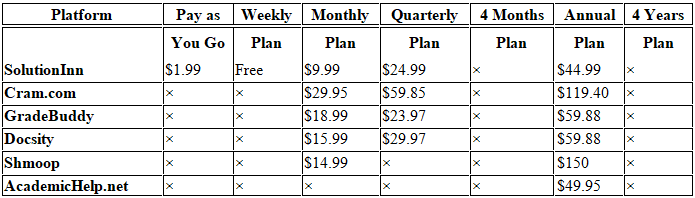
The table below outlines the subscription pricing for several leading educational platforms. This comparison will help highlight the cost-effectiveness and flexibility of each service, ensuring that students can find the best fit for their academic requirements.
Breaking Down the Costs
SolutionInn emerges as a flexible option with its variety of subscription plans tailored to different needs. Starting with a Pay as You Go model at $1.99, students can access resources without a long-term commitment. The platform also offers a unique Free Weekly Plan, which could be highly beneficial for students needing temporary assistance. For those requiring consistent access, the Monthly Plan is priced at $9.99, while the Quarterly Plan is available at $24.99. The Annual Plan, costing $44.99, provides significant savings for long-term users, positioning the platform as a cost-effective option for comprehensive academic support.
Cram.com offers higher-priced options, starting with a Monthly Plan at $29.95. The Quarterly Plan at $59.85 and the Annual Plan at $119.40 cater to students who prefer to pay for extended access upfront. While the platform is known for its flashcard creation tools, the absence of a Pay as You Go or Weekly Plan may limit its appeal to those seeking more flexible, short-term options.
GradeBuddy presents a more moderate pricing structure, with a Monthly Plan at $18.99 and a Quarterly Plan at $23.97. The Annual Plan is competitively priced at $59.88, making it a viable option for students who need regular access to study guides and lecture notes throughout the academic year. However, similar to Cram.com, the lack of a Weekly Plan or Pay as You Go option could be a drawback for students on a tight budget.
Docsity is another platform with a focus on affordability, offering a Monthly Plan at $15.99 and a Quarterly Plan at $29.97. The Annual Plan, priced at $59.88, is comparable to GradeBuddy, but like the other platforms mentioned, it does not offer a Weekly or Pay as You Go option. Docsity’s strength lies in its extensive library of user-generated content, which can be a valuable resource for students who prefer diverse study materials.
Shmoop stands out with its Monthly Plan at $14.99, though its Annual Plan is notably higher at $150. The platform is well-known for its test preparation and literature guides, making it a good choice for students focused on those areas. However, the higher cost of the Annual Plan may not align with the budgets of all students, especially when compared to other platforms with more affordable long-term options.
AcademicHelp.net offers a single Annual Plan at $49.95, making it the least expensive option for students seeking year-round writing assistance. While this pricing is attractive, the platform’s narrow focus on writing help may limit its usefulness for students who need a broader range of academic support.
Making the Right Choice
Choosing the right educational platform requires careful consideration of both pricing and the features offered. The platforms compared here each provide unique advantages depending on the student’s needs. Some platforms offer more flexibility with Pay as You Go and Weekly Plans, ideal for short-term or sporadic use. Others cater to students seeking comprehensive, long-term access with competitive Annual Plans.
Among these options, there are platforms that not only match but exceed the value offered by others, especially when it comes to affordability and flexibility. The inclusion of innovative features like AI-driven tutoring and access to free textbooks further enhances the learning experience, offering students a more personalized and effective approach to their studies.
Ultimately, the best choice will depend on the individual student’s academic goals, budget, and preferred learning style. By carefully evaluating the options and considering the value-added features available on some platforms, students can make an informed decision that maximizes their investment in educational resources.